
Disclosure: As an Amazon Associate I earn from qualifying purchases. How this site works
Fleece vs French Terry
Same outside, different inside.
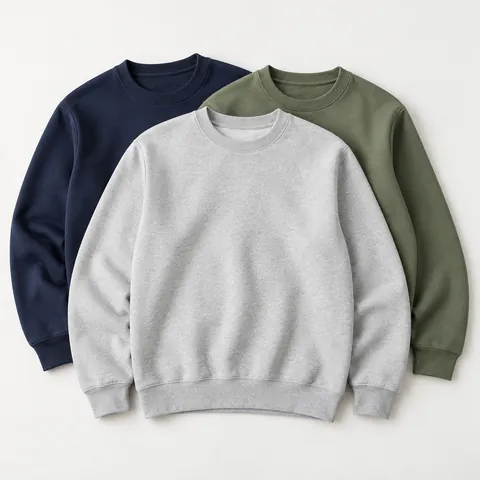 Cotton crewnecks
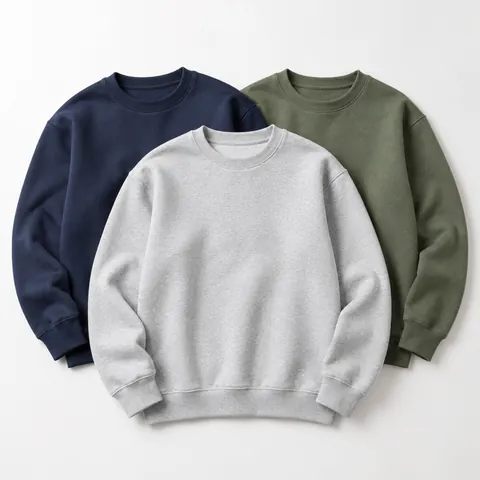 Cotton-poly blend sweatshirts
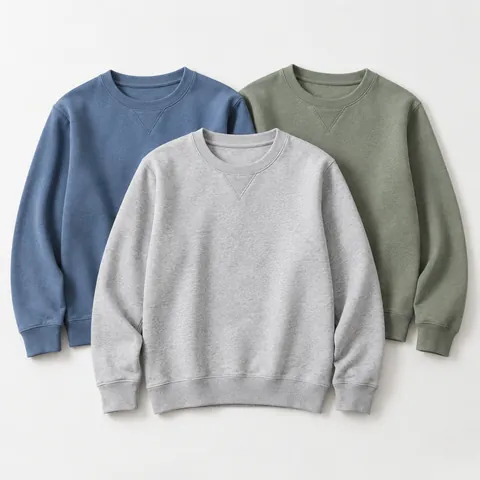 French terry sweatshirts
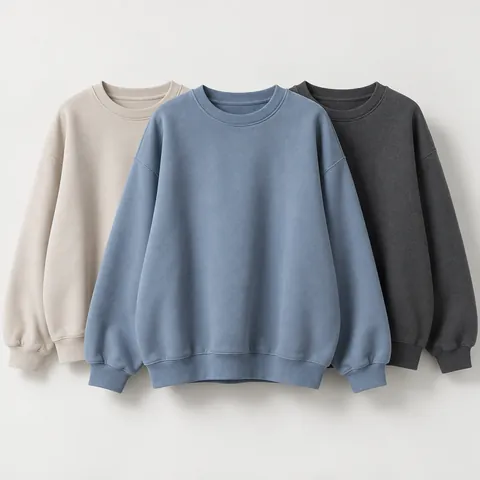 Oversized crewnecks
Compared
| Brushed fleece | French terry | |
|---|---|---|
| Inside | Fluffy | Loops |
| Warmth | Warmer | Lighter |
| Breathability | Lower | Higher |
| Pilling | More likely | Less likely |
Choose
- Fleece for cold days and lounging.
- French terry for layering and milder weather.
See French terry sweatshirts and cotton crewnecks.
What is the real difference between fleece and French terry?
The key difference is the back side of the knit. Sweatshirt fleece starts as a knit fabric and is brushed on the inside until the yarns lift into a soft nap. French terry is also knit, but the inside is left as small, visible loops. That one construction choice changes warmth, airflow, bulk, and how the sweatshirt ages.
Fleece feels softer when new because the brushed surface has more loft against your skin. That loft traps warm air, which is why fleece is the usual choice for cold offices, winter errands, and couch wear. The trade-off is that the fuzzy inside can shed lint at first, flatten over time, and collect more pet hair or loose fibers.
French terry feels smoother and drier. The looped inside does not have the plush blanket feel of fleece, but it moves air better and can feel less clammy when temperatures change. If you run warm or want a crewneck you can wear indoors, outdoors, and under a jacket, French terry sweatshirts are often easier to use across more seasons.
Which sweatshirt fabric should you buy for your weather and routine?
| Use case | Better pick | Why |
|---|---|---|
| Cold mornings, winter lounging, drafty rooms | Fleece | The brushed inside traps more warmth and feels cozier. |
| Spring, fall, travel, and changeable weather | French terry | It layers well and is less likely to feel overheated indoors. |
| Wearing under a coat or vest | French terry | The flatter inside and lower bulk slide under outer layers more easily. |
| Maximum softness when new | Fleece | The brushed nap gives a plush feel right away. |
| A neater surface after many wears | French terry | The looped interior usually has less loose fuzz to mat or pill. |
For outdoor cold, fleece is the safer default. It gives you more insulation for the same basic sweatshirt shape. For indoor wear, commuting, or mild climates, French terry is often more comfortable because it does not trap as much heat.
If you want one crewneck for year-round use, pick a midweight French terry or a not-too-heavy fleece. Very heavy fleece can be great in winter but frustrating indoors. Very light French terry can feel more like a long-sleeve knit top than a sweatshirt.
- Choose fleece if you often add a sweatshirt because you are cold.
- Choose French terry if you often take a sweatshirt off because you get warm.
- Choose fleece for soft, cozy comfort at home.
- Choose French terry for layering, travel, and cleaner everyday wear.
- Choose a cotton-poly option if you want easier care and less concern about shrinking than many all-cotton styles.
How to read labels, fabric weight, and product photos
Do not buy from the fabric name alone. A heavy French terry can be warmer than a very light fleece, and a dense fleece can feel stiff if the cut is slim. Look for the fiber content, fabric weight, interior photo, and fit notes before you decide.
Fiber content affects feel and care. Cotton usually feels more natural and breathable, but it may shrink more if dried hot. Polyester can add shape retention, quicker drying, and less wrinkling. A cotton-poly blend is common in sweatshirts because it balances softness, durability, and easy washing. If you want that balance, compare cotton-poly crewneck sweatshirts rather than only all-cotton options.
If the seller lists fabric weight, use it as a clue, not a guarantee. Higher fabric weight generally means a denser, warmer garment, but the knit, brushing, and fit still matter. Avoid comparing fabric weight to total garment weight; they measure different things.
- Check the inside photo. Fleece should look fuzzy or brushed; French terry should show small loops.
- Read the fiber content. Decide whether you prefer mostly cotton feel, blended easy care, or more synthetic performance.
- Look for fit language. Relaxed, oversized, classic, and slim can change how warm the same fabric feels.
- Check cuff and hem details. Firm ribbing holds shape better; very loose ribbing can look sloppy faster.
- Review washing instructions. If it says tumble dry low or lay flat, high heat may cause shrinkage or surface wear.
- Confirm return rules before buying multiple colors or sizes, especially if the brand does not give garment measurements.
Fit, layering, and sizing tips for crewneck sweatshirts
Fit changes the way fleece and French terry perform. A close-fitting fleece can feel very warm because there is less airflow. A relaxed French terry can feel cooler because air moves through the garment and around the body. If warmth is the goal, do not size up too far unless you plan to layer underneath.
For layering under a jacket, pay attention to shoulder seams, sleeve bulk, and hem length. French terry usually layers more neatly because it is less plush inside. Fleece can bunch at the sleeves or feel tight under a fitted coat, especially if the sweatshirt has dropped shoulders or thick ribbed cuffs.
Oversized crewnecks are a fit choice, not just a size choice. If you want a loose look without sleeves swallowing your hands, look for styles described as oversized rather than simply buying two sizes up. Purpose-built oversized crewneck sweatshirts often adjust the body, sleeve, and shoulder proportions together.
- For a clean everyday fit, the shoulder seam should sit near the shoulder or slightly dropped, and the hem should not balloon out.
- For layering over a T-shirt, allow enough room through the chest without a tight pull at the armpits.
- For layering under outerwear, avoid extra-long sleeves and very bulky fleece unless the jacket is roomy.
- For lounging, prioritize softness and relaxed width over a sharp silhouette.
- For a neater look, choose French terry or a smooth-faced fleece with sturdy ribbing.
Care and durability: how to keep each fabric looking good
Wash sweatshirts inside out to reduce abrasion on the outer face. Use cold or warm water, not hot, unless the care label says otherwise. Hot water and high dryer heat can increase shrinkage, fade color faster, and make fleece look rough sooner.
Fleece may shed lint during the first few washes. Wash it with similar colors and avoid towels, which can add more lint. If pills appear, use a fabric shaver gently on a flat surface rather than pulling pills by hand, which can damage yarns.
French terry usually has less fuzzy lint, but the loops can snag. Keep it away from hook-and-loop closures, rough bag straps, and open zippers in the wash. If a loop pulls, do not cut it unless it is broken; gently work it back into the fabric from the inside.
For both fabrics, skip heavy fabric softener if the sweatshirt starts feeling coated or less breathable. Dry on low and remove it when slightly damp if you are trying to limit shrinkage. Fold rather than hang heavy sweatshirts for long storage, since hangers can stretch the shoulders.
Frequently asked questions
Is French terry warm enough for winter?
French terry can work in winter as a layer, especially under a jacket or over a thermal shirt. By itself, it is usually better for mild cold than deep cold because the looped inside does not trap as much warm air as brushed fleece.
Does fleece or French terry shrink more?
Shrinkage depends more on fiber content and drying heat than on fleece versus French terry alone. All-cotton versions are usually more shrink-prone than many cotton-poly blends. To reduce shrinkage, wash cooler, dry low, and avoid overdrying.
Which is better for working out, fleece or French terry?
French terry is usually the better choice for warmups, walking, and light workouts because it breathes better and feels less bulky. Fleece can be useful before or after exercise in cold weather, but it may feel too warm once you start sweating.
Why does my fleece sweatshirt pill?
Pilling happens when loose fibers rub together and form small balls on the fabric surface. Brushed fleece has more raised fibers, so it can be more prone to pilling than a smoother loopback fabric. Washing inside out and drying on low can help slow it down.
Are fleece and French terry both good for custom printing?
Yes, both can be used for printed crewnecks, but the smoothness of the outer face matters more than the inside finish. A flatter, tighter outer knit usually gives cleaner print edges. Always check the printer's garment recommendations before ordering a large batch.
Disclosure: As an Amazon Associate I earn from qualifying purchases. This site may earn a commission when you buy through its links, at no extra cost to you. Product details come from public manufacturer information; always check the merchant page for current specifications and prices. We have not hands-on tested the products described here.